BMAT – Music Rights Monitoring & Reporting
This application was the first in a suite of tools built to help a music-rights company automate and manage royalty distribution across TV, radio, streaming platforms, and online services. While most audio gets auto-matched, mismatches, missing metadata, and licensing disputes still require expert review — especially across different territories.
Context
Before this project, no dedicated tool with full workflow existed. The company needed a scalable way to:
-
ingest large monthly data submissions from broadcasters and platforms,
-
auto-match content,
-
flag mismatches or incomplete metadata,
-
support dispute resolution with rights documentation,
-
and ensure royalties reach the correct artists and rights holders.
The tool was designed for highly specialized internal roles managing rights per country.
Key Challenges
I was the sole designer, responsible for both UX and UI. After an initial attempt based on prescriptive instructions (such as “put breadcrumbs here”) by the company, I shifted to request a problem-first design process (tell me what the user need to achieve or where are they struggling), which led to a much clearer product direction.

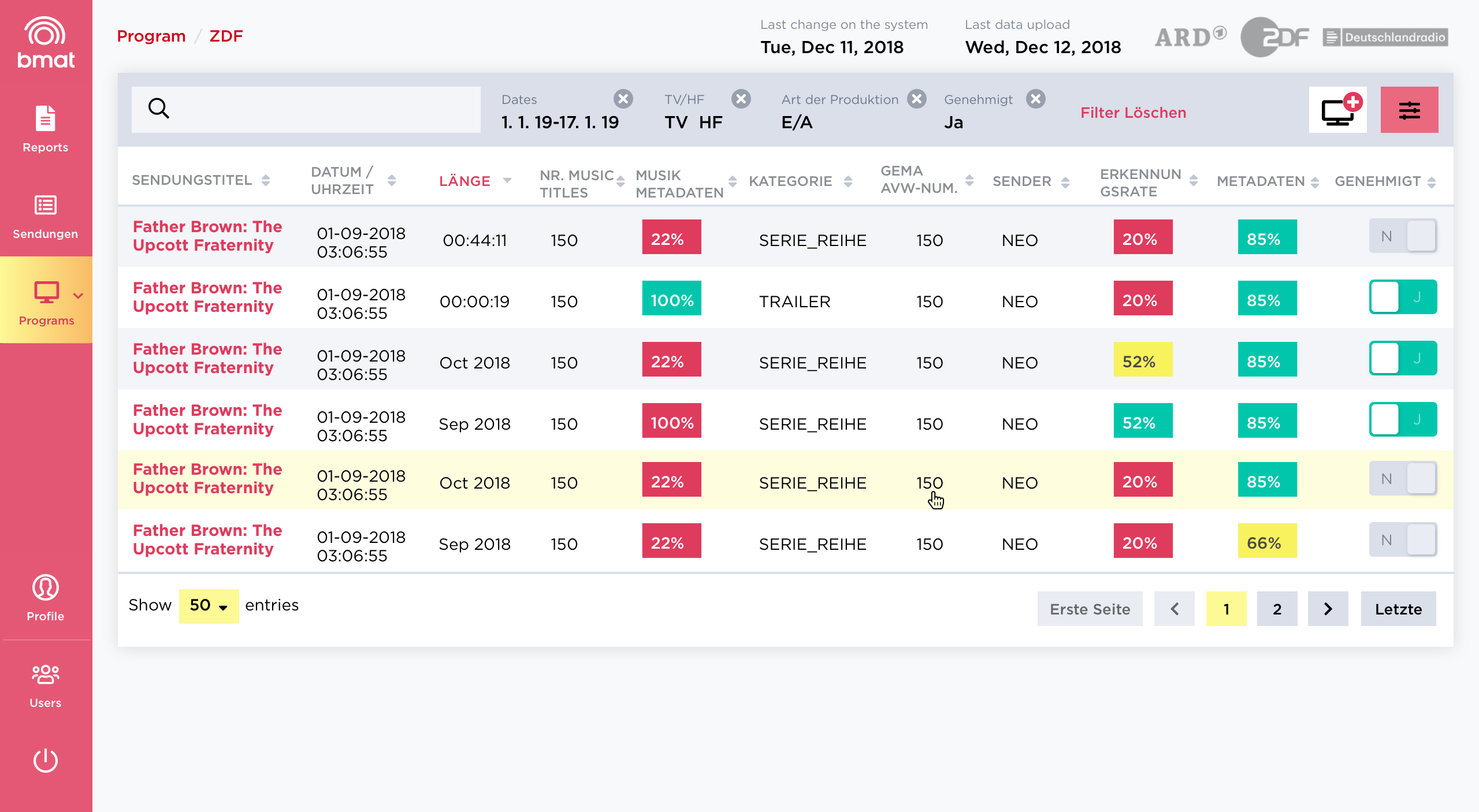
The core challenge was presenting large volumes of complex, interconnected data in a way that specialists could navigate quickly. The system needed to:
-
surface missing or conflicting metadata,
-
support reviewing mismatched tracks manually,
-
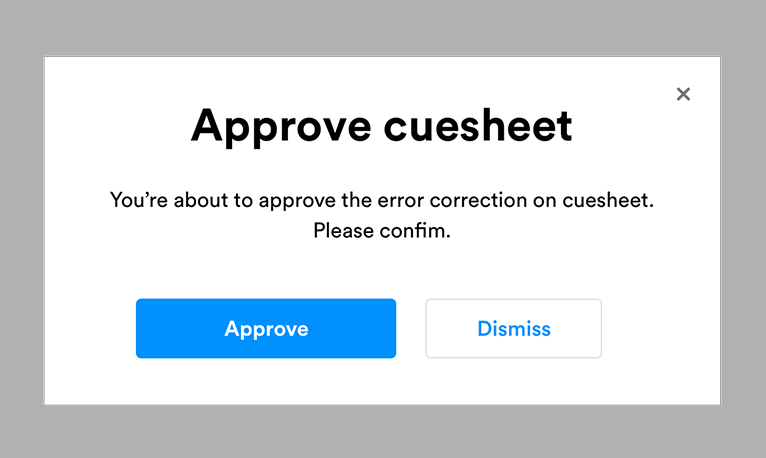
and keep the workflow clear enough to “close” monthly cue sheets.
Approach
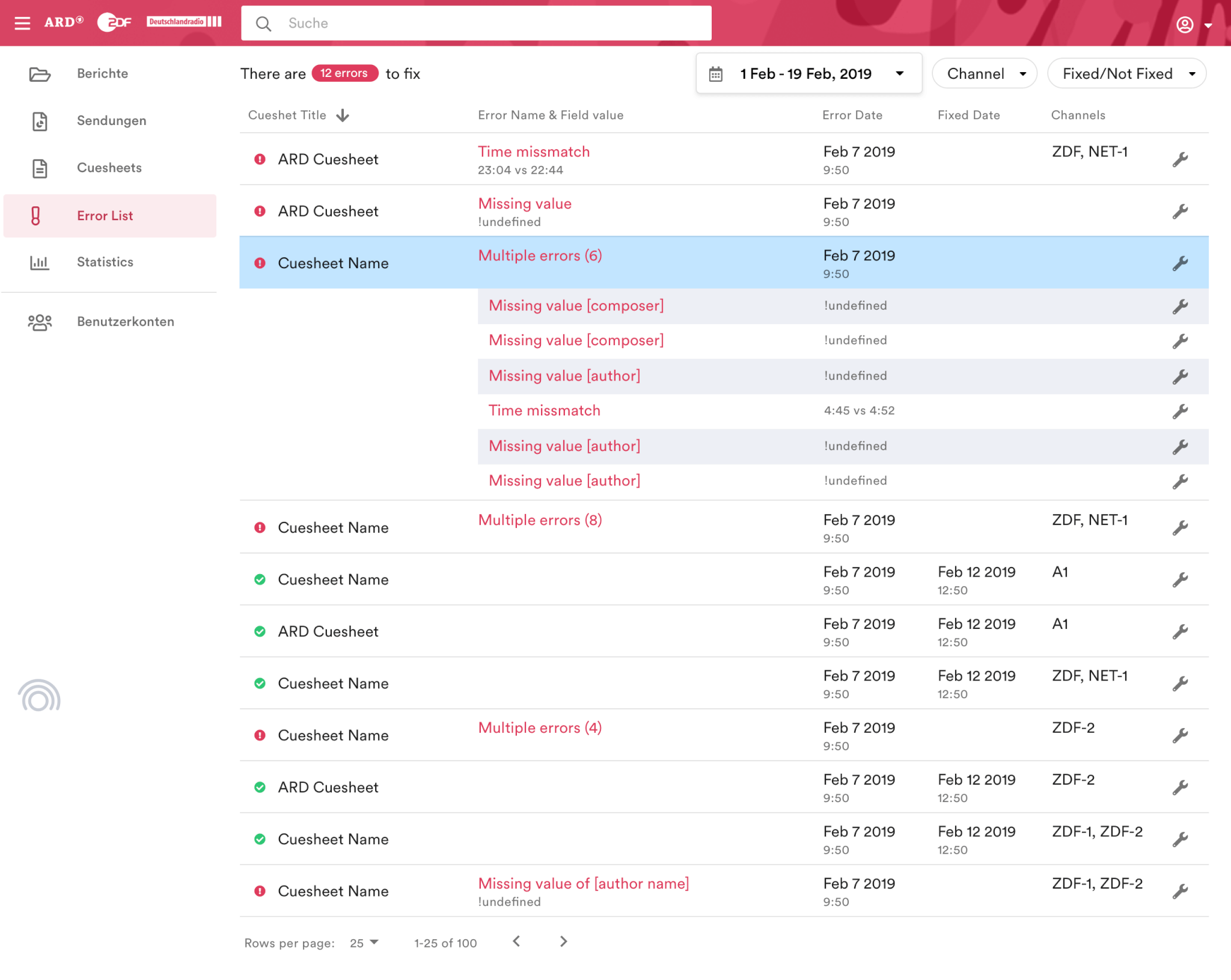
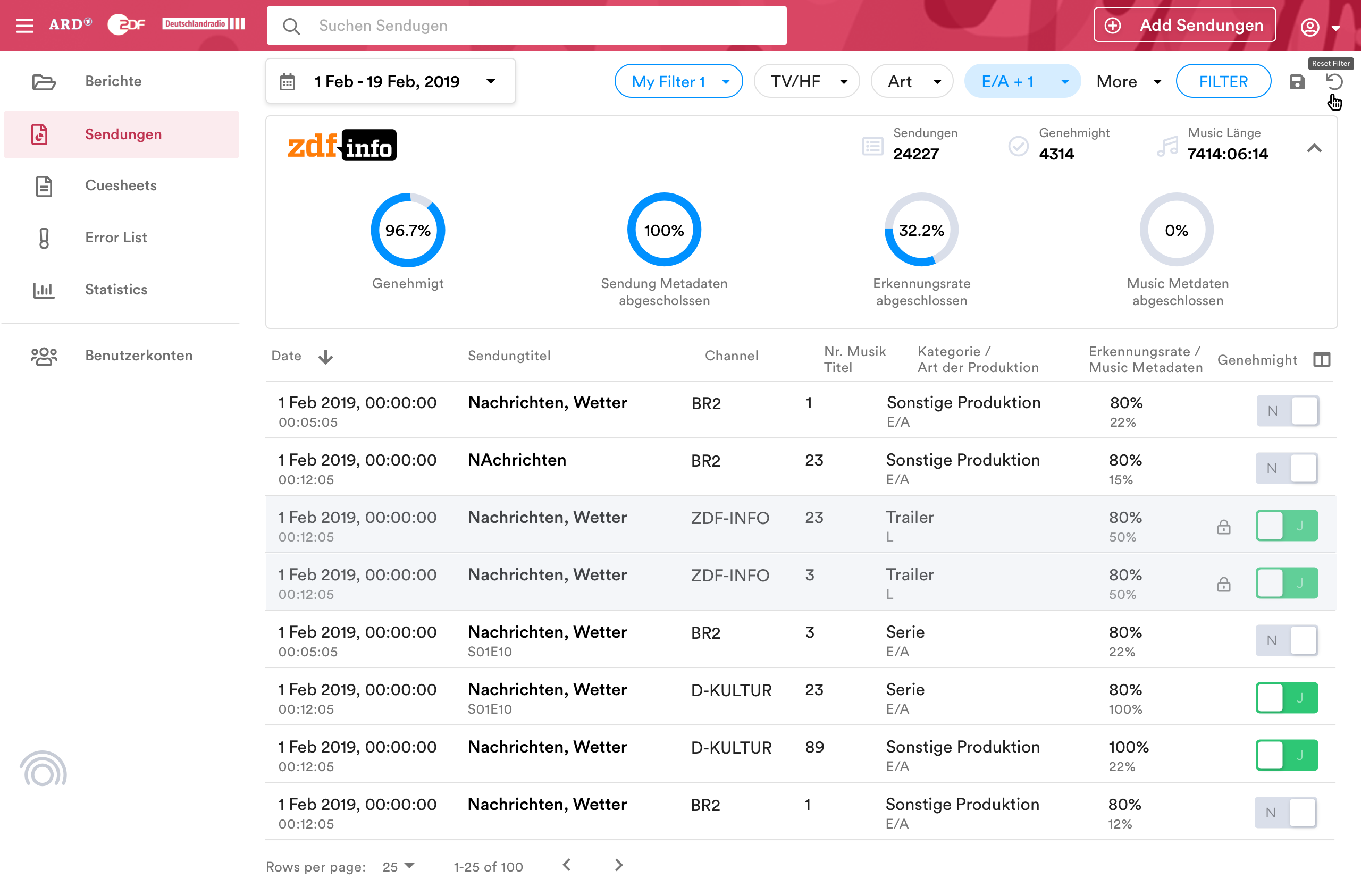
I created flows, wireframes, and interactive prototypes early on to validate the process. Instead of creating a dense, fixed-table interface, the design introduced flexible filtering and sorting, clean table structures with progressive detail views, ability to add or remove data to the tables and clear visual indicators for required actions.
The initial UI followed the company’s unique colorful brand identity, but we later shifted to a neutral, minimal interface better suited for a professional data tool. Localized versions included some functional and visual adjustments per territory. The only area where some more “branding” was kept was the app header.


Outcome
The product successfully launched as the foundation for several related applications built later. Its biggest achievement: transforming a complex, high-volume rights workflow into a tool specialists could work with efficiently — proving that even heavy data can be made usable and clear.

bmat.com